Stamped concrete that looks like stone and wears like a slab
Stamped concrete gives you the look of slate, flagstone, cobble or brick on a single poured slab. Done well, it's one of the best-value finishes for a patio or a pool deck. Done in a hurry, it's a flaking, faded mess in three years.
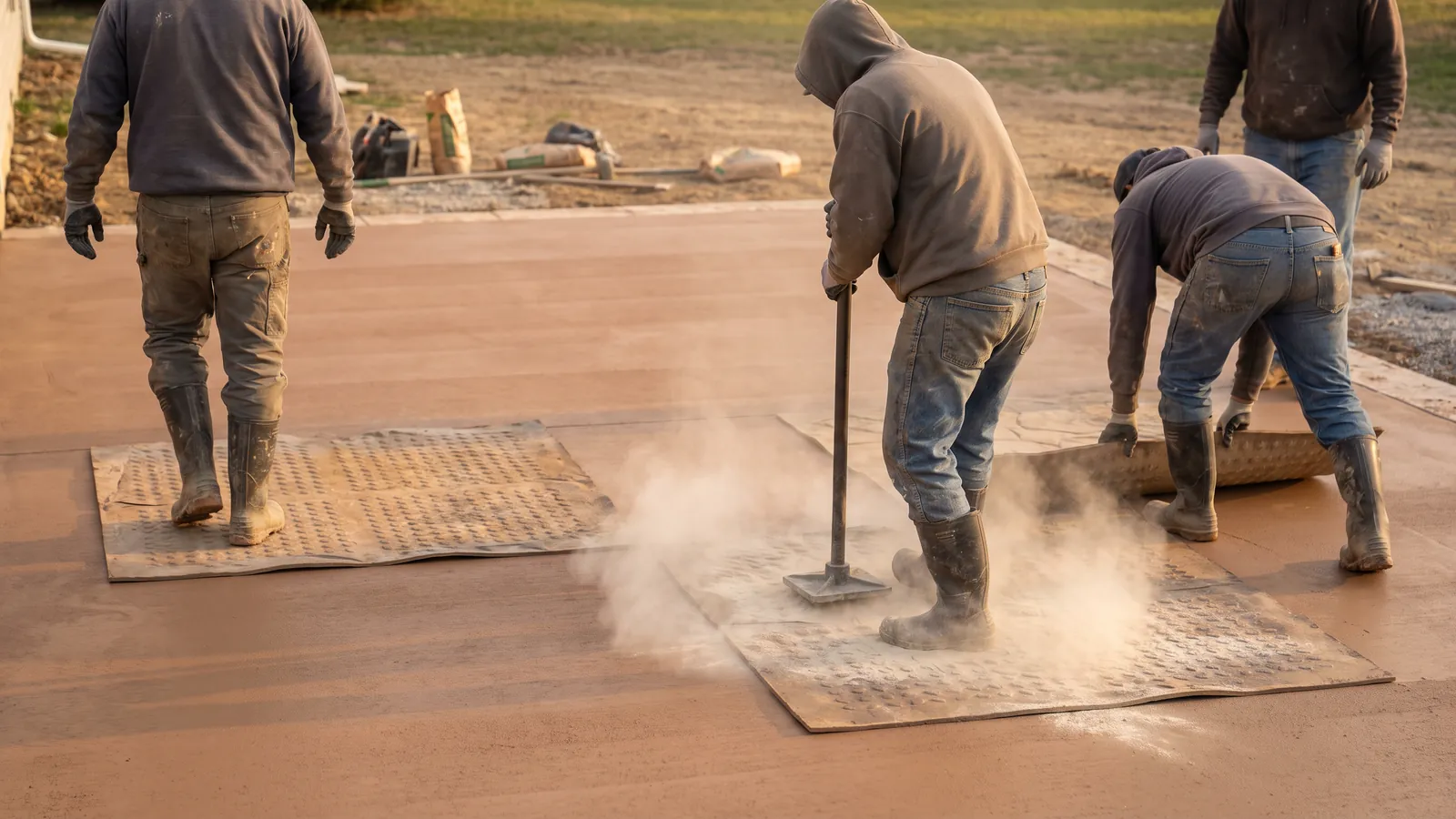
Stamping is a timing game. The slab is poured with color mixed into the concrete, or color hardener broadcast across the surface, and floated smooth. A release agent goes on, either a powder in a contrasting shade or a clear liquid, so the stamp mats don't stick. Then the crew lays the mats in sequence and tamps them in while the concrete is soft enough to take the pattern but firm enough to hold it. Too early and the edges slump. Too late and the pattern is shallow and patchy. On a hot Huntsville afternoon that window can be short, which is why we size the crew to the slab and pour stamped work early in the day.
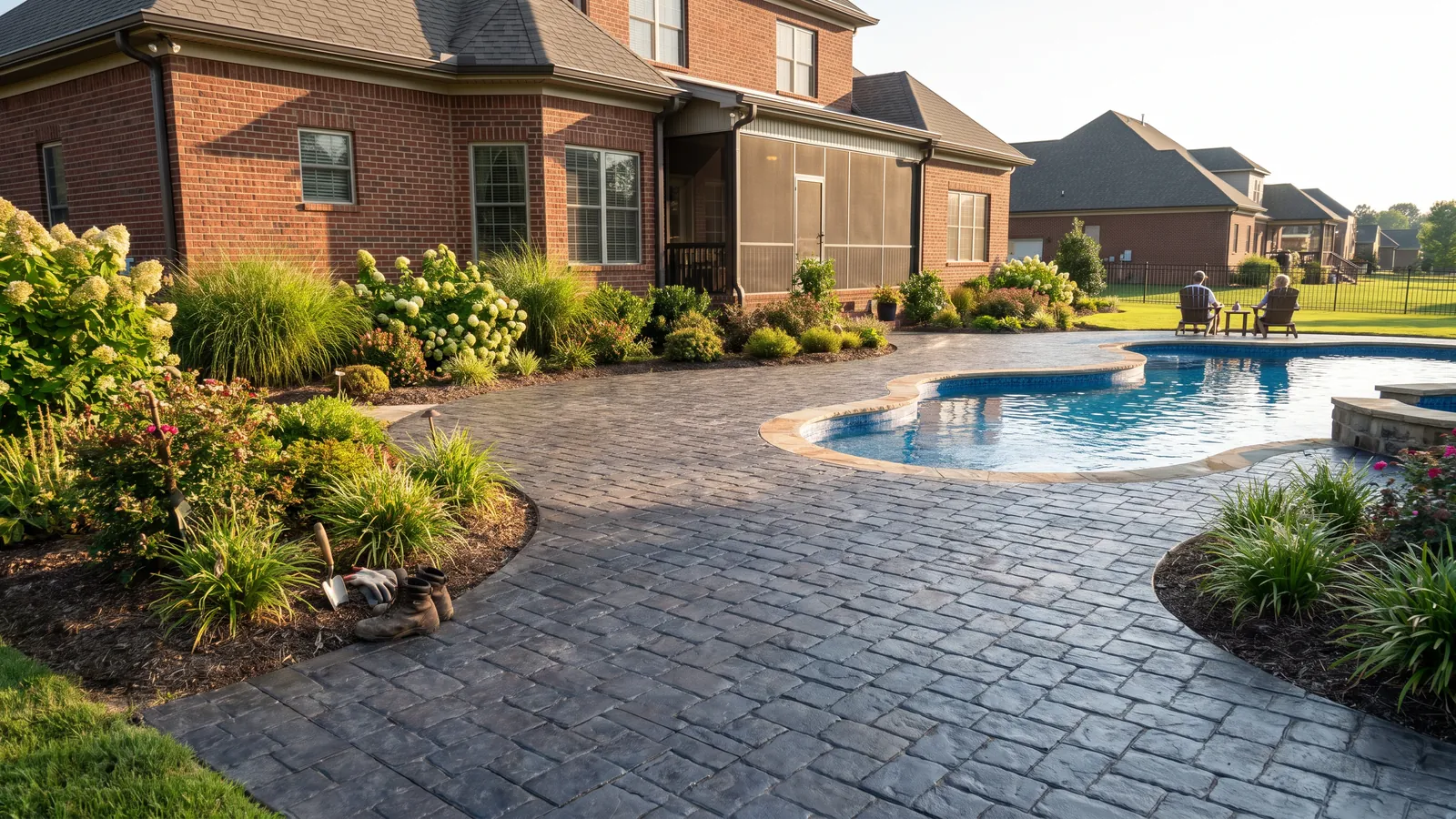
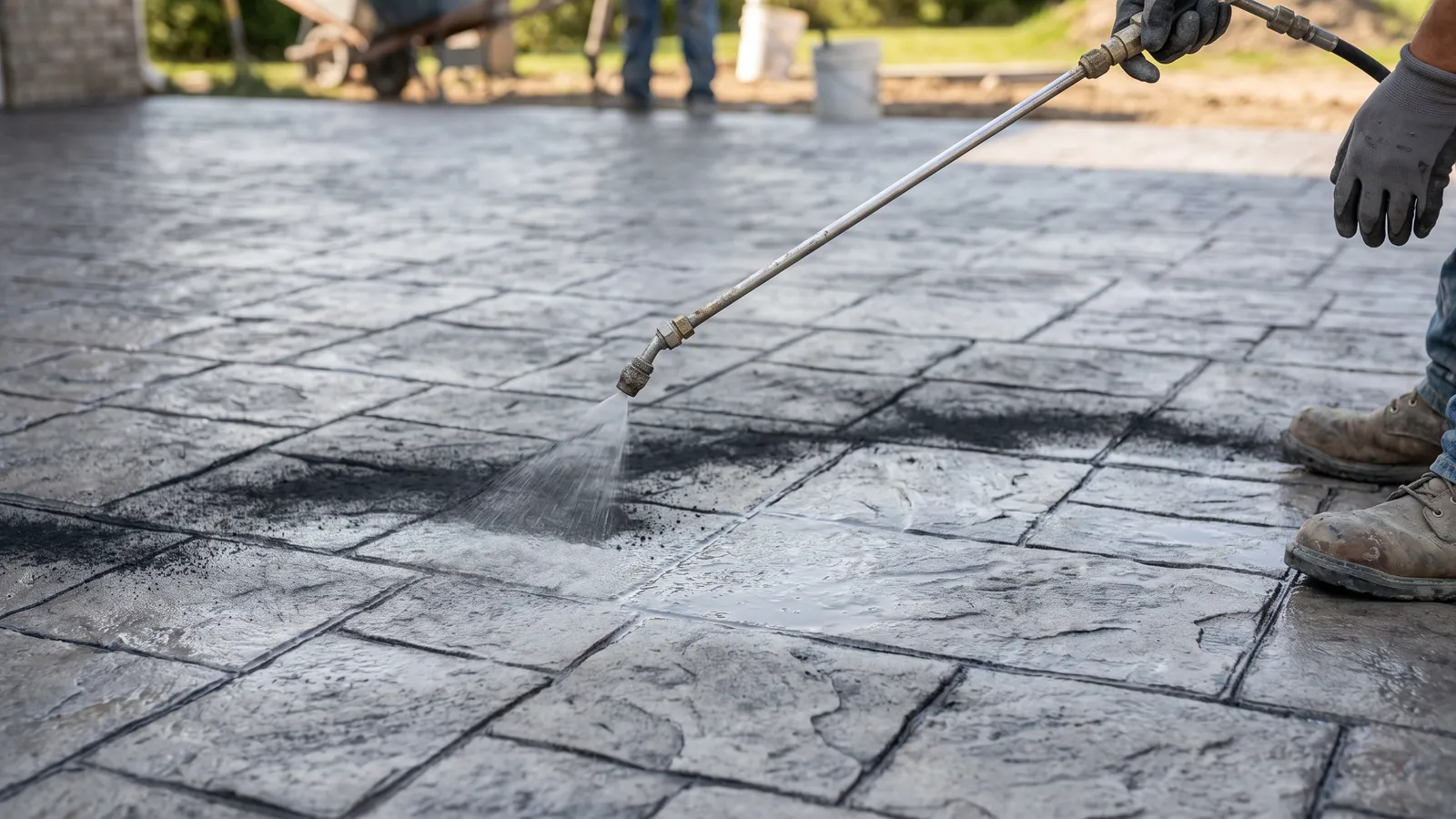
Pattern and color are where the choices live. Ashlar slate and random flagstone hide the joints well and suit most brick homes here. Cobblestone and running bond brick work for walks and borders. A border band in a contrasting stamp or color frames a patio and makes the field look intentional. We'll show you samples and photos in daylight, because color charts lie under fluorescent light. The antique release left in the low spots after washing gives the stone look its depth.
The step people skip is sealing, and that's the step that decides how it ages. Stamped concrete gets a sealer once the slab has cured enough to accept it, and it needs a fresh coat every two to three years outdoors to keep the color from chalking and to protect the surface from freeze-thaw. Joints still have to be cut, and a good crew hides them in the pattern's grout lines. We'll also tell you about slip: sealed stamped concrete can be slick when wet, so around pools and on steps we add an anti-slip grit to the sealer.
What the job includes
- Pattern and color chosen in daylight. Samples and photos of real jobs, not just a printed chart
- Integral color or color hardener. Color through the slab or in a dense top layer, with a contrasting release for depth
- Crew sized to the window. Enough hands to stamp the whole slab while it's at the right stage
- Joints hidden in the pattern. Control joints cut along grout lines where the eye won't find them
- Sealer with anti-slip grit. Applied after cure, with grit added near pools and on steps
- Resealing plan. Written schedule for recoating, usually every two to three years
Stamped concrete prices in Huntsville
| Item | Typical 2026 range | What drives it |
|---|---|---|
| Stamped patio, one color + release | $13 – $19 / sq ft | Pattern, border, slab shape |
| Stamped pool deck | $14 – $21 / sq ft | Coping details, drains, anti-slip |
| Contrasting border band | + $4 – $8 / linear ft | Width and second pattern |
| Stamped walkway or steps | $15 – $24 / sq ft | Forming and edge work |
| Reseal existing stamped concrete | $1.50 – $3 / sq ft | Cleaning, stripping old sealer |
| Typical 300 sq ft stamped patio | $3,900 – $5,700 | Field pattern with one border |
See the stamped concrete cost guide for a side-by-side with broom finish and pavers. Your number is written after we measure and you pick the pattern.
On the job
Questions about stamped concrete
Is stamped concrete slippery?
It can be when wet, especially with a glossy sealer. We add an anti-slip grit to the sealer on pool decks, steps and walks, and recommend a satin rather than high-gloss finish where people walk barefoot.
Will stamped concrete crack?
It's still concrete, so yes, it shrinks and needs control joints. We cut them along the pattern's grout lines so they disappear. A crack that does form can be colored to blend with the pattern.
How often does it need resealing?
Outdoors here, every two to three years, sooner on a pool deck or a south-facing patio. Resealing keeps the color strong and protects the surface. It's a weekend job or a quick visit from us.
Stamped concrete or pavers?
Pavers can be lifted and reset one at a time and don't need sealing to the same degree, but they cost more to install and can settle unevenly on clay. Stamped concrete costs less up front and won't grow weeds in the joints, but it needs resealing. We'll price both looks honestly.
Can you stamp my existing patio?
Not by stamping the old slab, but a stamped overlay, a thin polymer-modified layer pressed with a pattern, can go over a sound, uncracked slab. If the patio is cracked or sinking, the overlay will follow the damage.