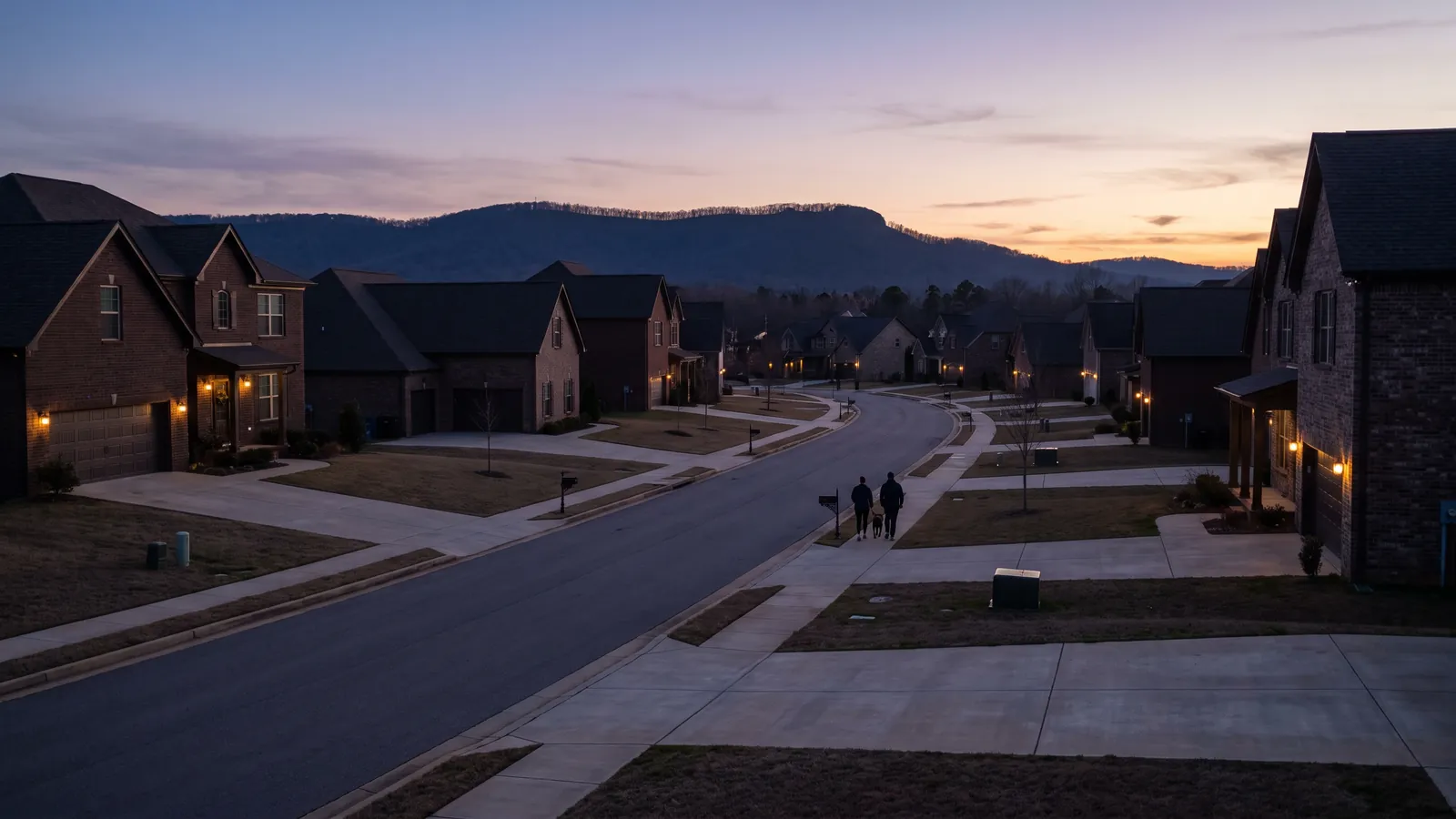
A concrete patio built level enough for the table and pitched enough for the rain
Back patios here have two jobs: hold a table, a grill and a summer of evenings, and shed a Valley thunderstorm away from the foundation. Get the size, the slope and the base right and the rest is finish.
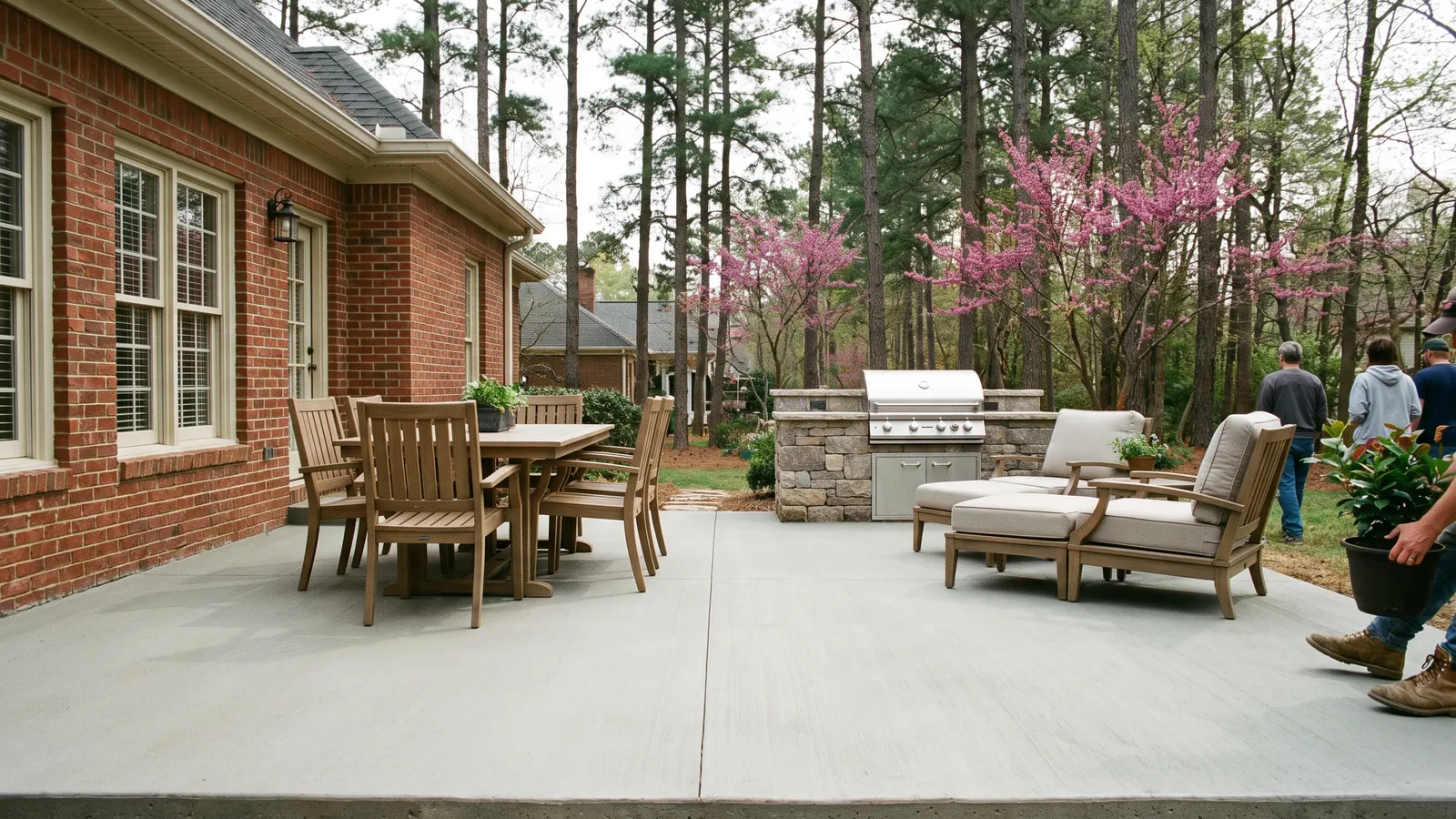
The patio is the slab people live on, so we start with how you'll use it. A table for six with chairs pulled out needs about twelve by twelve feet; add a grill station and a walkway past it and you are closer to sixteen by sixteen. A fire pit wants its own room and a way to keep the chairs off the lawn. We'll mark it out on the ground with paint or string before anything is dug, because a patio is hard to make bigger later.
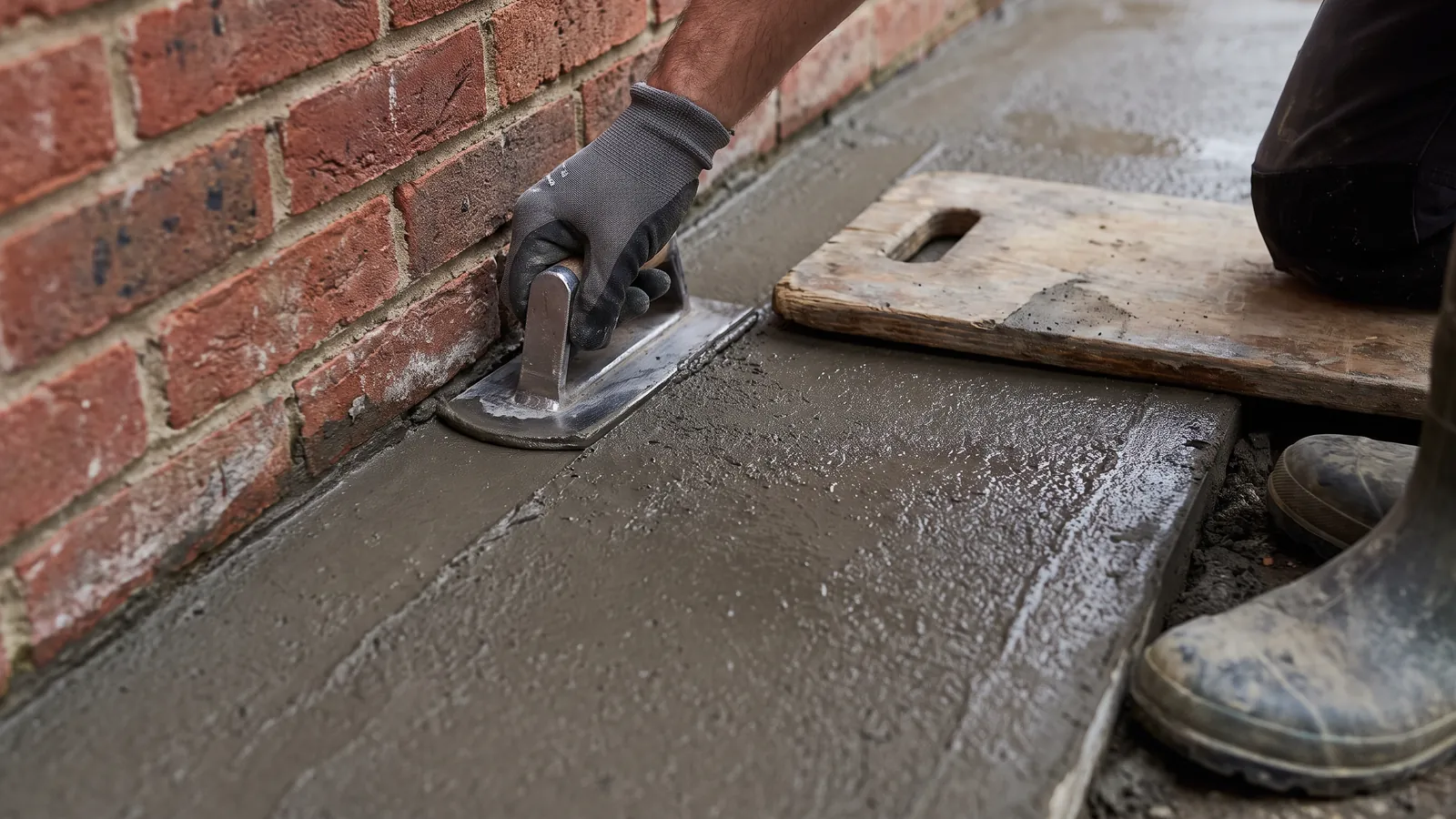
Next is water. Behind most Huntsville homes the yard was graded toward the house at some point, or the gutters dump right where the patio is going. The slab gets pitched away from the foundation, about an eighth to a quarter inch per foot, which you won't notice under a chair but rain will. Where the yard slopes up behind the patio, we may add a small swale, a drain, or a short retaining wall so the patio doesn't become the yard's drain field. The patio meets the house with an isolation joint so the two can move separately.
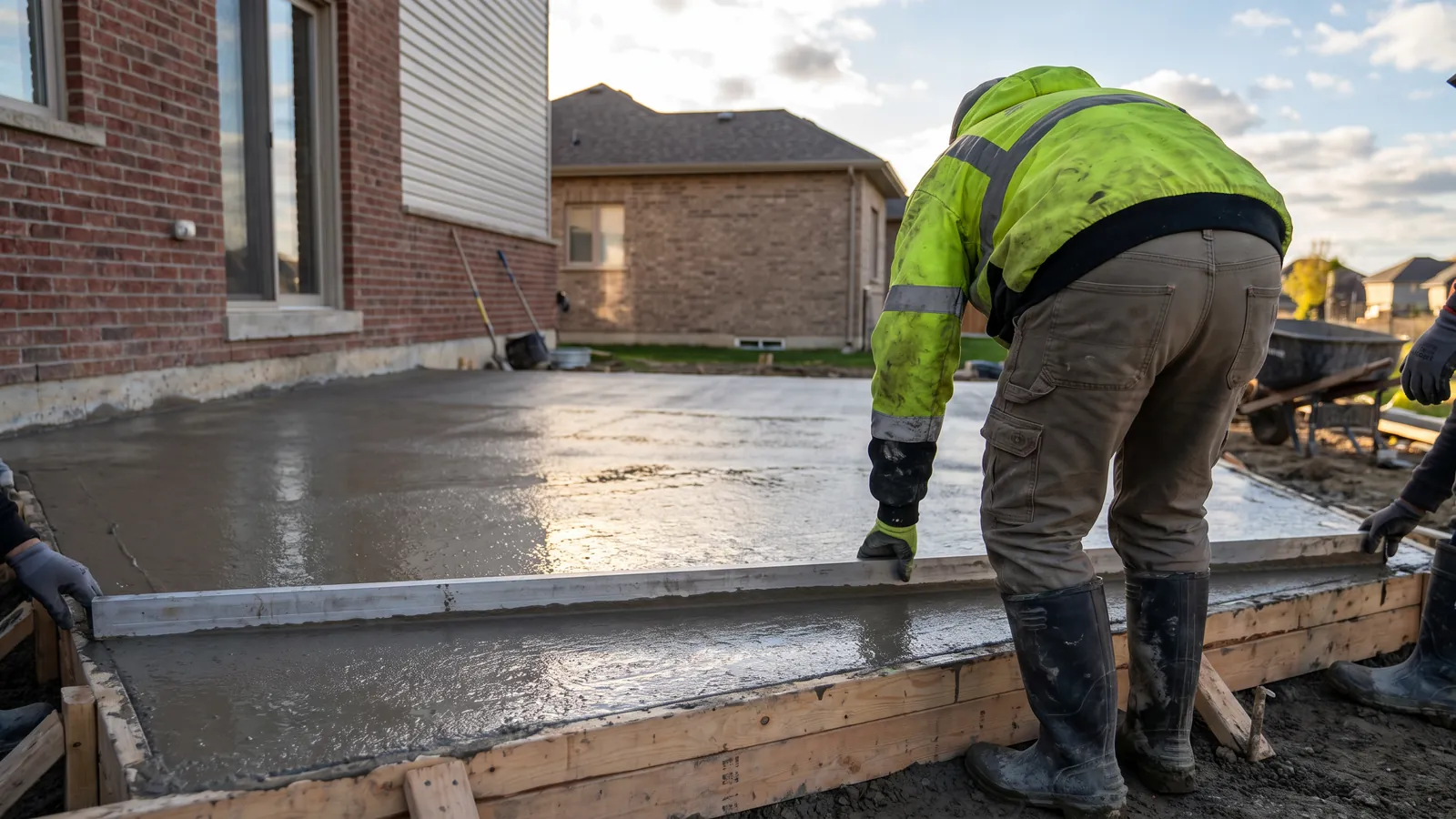
Underneath, it's the same discipline as a driveway at patio scale: organic soil out, a compacted stone base, fiber or wire for crack control, and a four-inch slab of air-entrained mix. Finish is your choice. A light broom finish is the grippiest and cheapest. A smooth trowel finish is easy to sweep but slick when wet. Stamped and decorative finishes cost more and are on their own pages. Joints are laid out to suit the shape, sometimes on a diagonal or around a planter, so the slab cracks where we planned it to.
What the job includes
- Layout before digging. Size and shape marked on the ground and checked against how you'll use it
- Pitched away from the house. A steady fall to the yard, with isolation where the slab meets the foundation
- Water from the yard handled. Swales, drains or a low wall where the ground slopes toward the patio
- Stone base and crack control. Compacted base, fiber or wire, four-inch air-entrained slab
- Finish you pick. Broom, smooth trowel, or a step up to stamped, stained or exposed aggregate
- Joints planned for the shape. Laid out around corners, steps and planters so cracks follow the lines
Concrete patios prices in Huntsville
| Item | Typical 2026 range | What drives it |
|---|---|---|
| Broom-finish patio, 4 in. | $7 – $12 / sq ft | Size, access to the backyard, digging needed |
| Typical 12×16 patio (192 sq ft) | $1,600 – $2,800 | Plain finish on a prepared base |
| Patio steps or a step-down to the yard | $350 – $700 per step | Width and forming |
| Pumping or buggying concrete to the back | $300 – $900 | When the truck can't reach the forms |
| Drain or swale behind the patio | $400 – $1,500 | Length and depth of the run |
| Removing an old patio first | $2 – $4 / sq ft | Thickness and access |
Ranges are for budgeting in the Huntsville area. Your price is written after we measure, with base, steel, finish, tear-out and permit on separate lines.
On the job
Questions about concrete patios
How big should my patio be?
Measure the furniture you'll actually put on it and add about three feet on every side where people walk or pull out chairs. For most families that lands between 200 and 400 square feet. We'll lay it out on the ground before we price it.
Can you pour against my house?
Yes, with an isolation joint between the slab and the foundation, and with the slab pitched away so water doesn't sit against the house. We keep the patio surface below any door threshold and weep holes.
Does a patio need a permit?
A simple patio on your own lot usually doesn't in Huntsville. A covered patio with a roof structure, a patio in an easement, or work in a neighborhood with an HOA may need approval. We'll flag it on the estimate.
Should I seal my new patio?
A penetrating sealer after the first month helps with stains from the grill and with freeze-thaw. Plain broom-finish patios don't strictly need it; stamped and colored ones do. See the care guide.
What if the truck can't reach my backyard?
We use a line pump or motorized buggies to move concrete to the forms, and the estimate shows that cost up front. We'll also protect the lawn path with plywood where the equipment travels.