Concrete repair: cracks, scaling, spalls and broken sections
Not every tired slab needs to be torn out. Cracks can be sealed, a flaking surface can be resurfaced, and a broken panel can be cut out and replaced. The trick is knowing when a repair is worth the money.
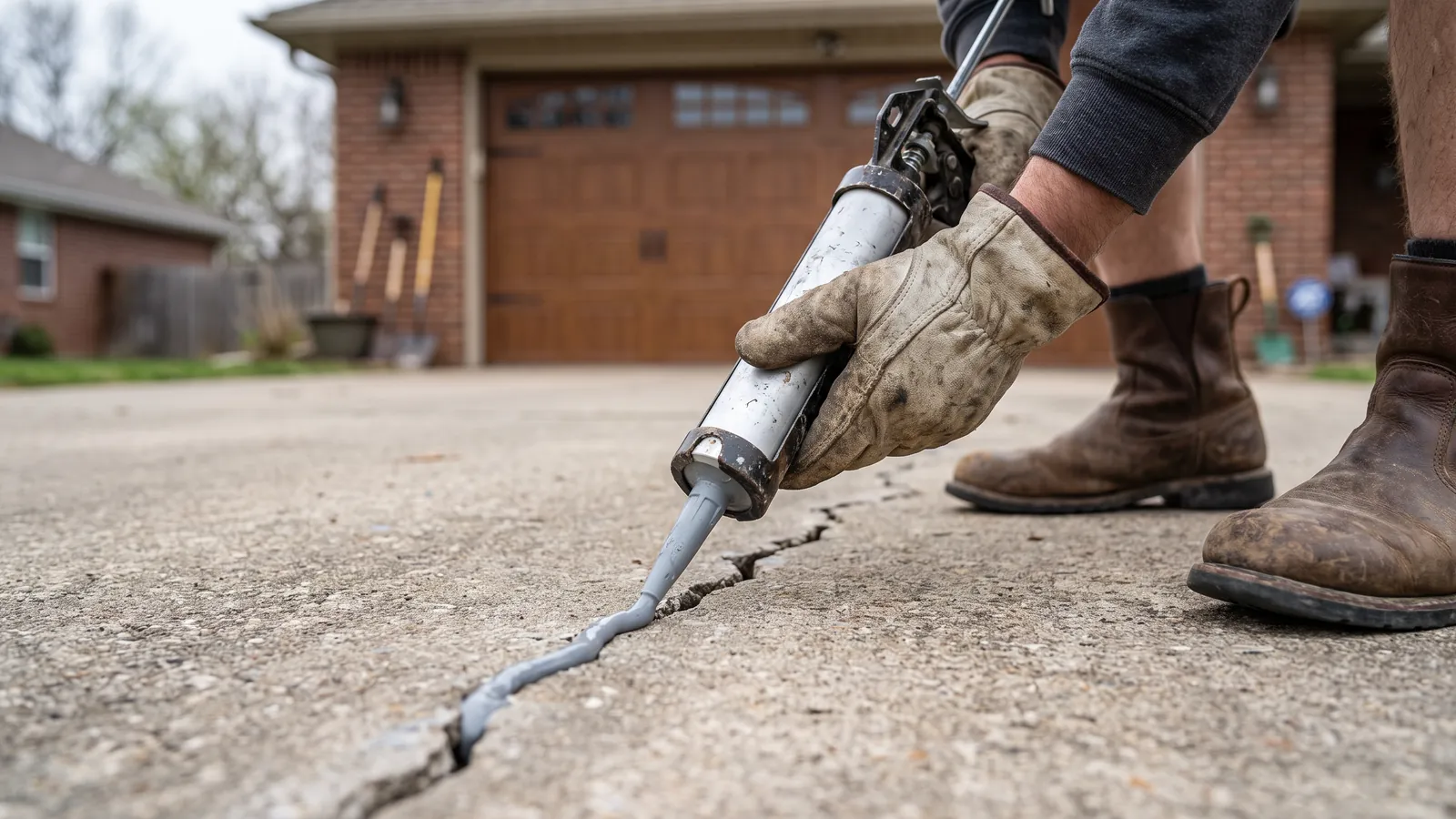
We look first, then name the fix. A hairline crack that isn't moving is cosmetic; we can rout and seal it with a flexible sealant to keep water out of the base. A crack that opens wider in winter and closes in summer gets a flexible joint sealant too, because rigid patch will just pop out. A crack with one side higher than the other means the ground has moved, and sealing it won't fix that; it needs leveling or replacement of that section.
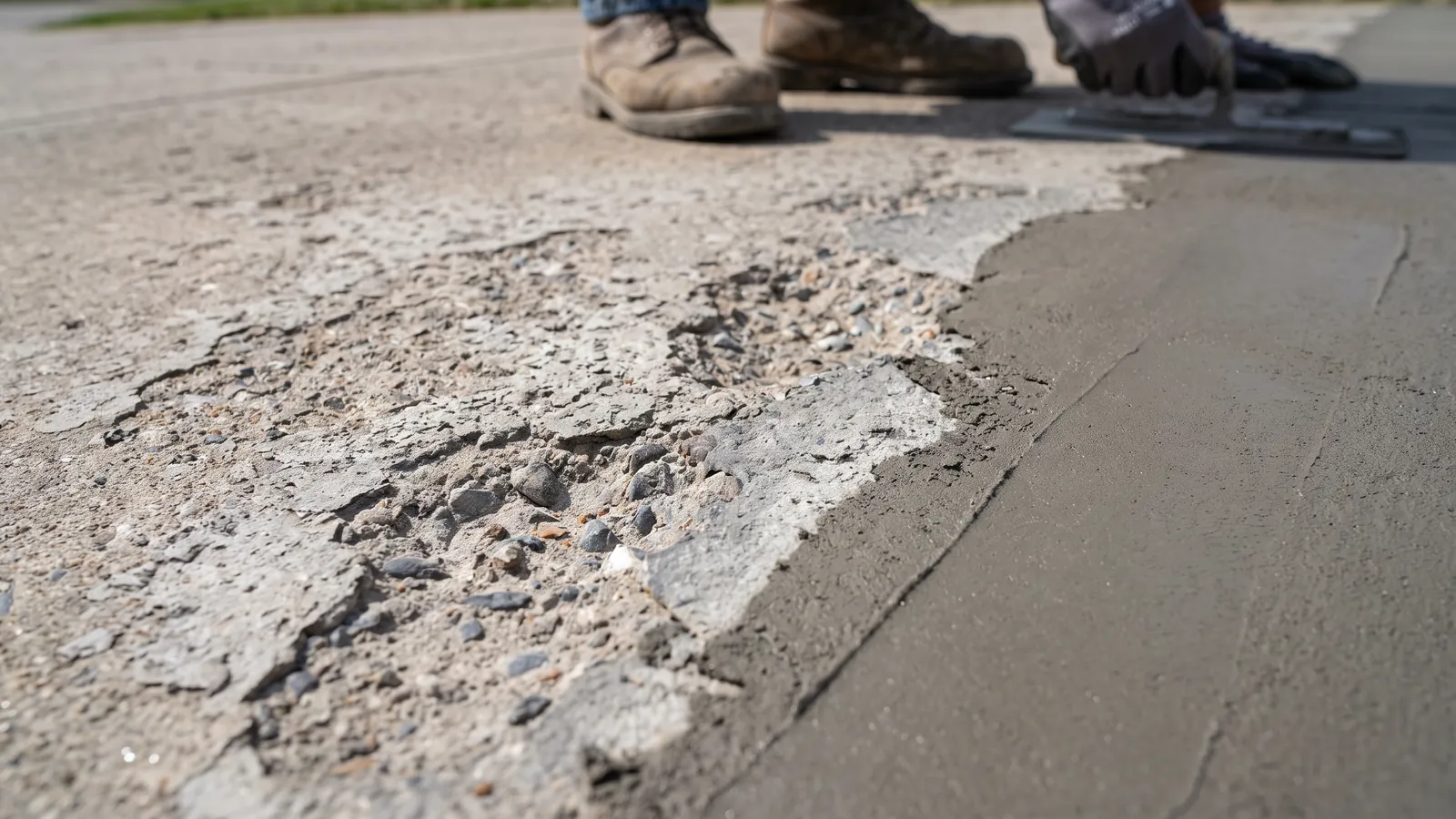
Scaling and spalling, where the top layer flakes off and leaves pits, is common on Huntsville drives poured without air entrainment, finished while bleed water was still on the surface, or treated with de-icing salt during an ice storm. If the slab beneath is sound, we grind or pressure-wash off the loose material and apply a polymer-modified resurfacer that bonds to the old concrete and gives it a new wearing surface, finished with broom texture to match. It's a fraction of replacement, and it lasts when the slab underneath is stable.
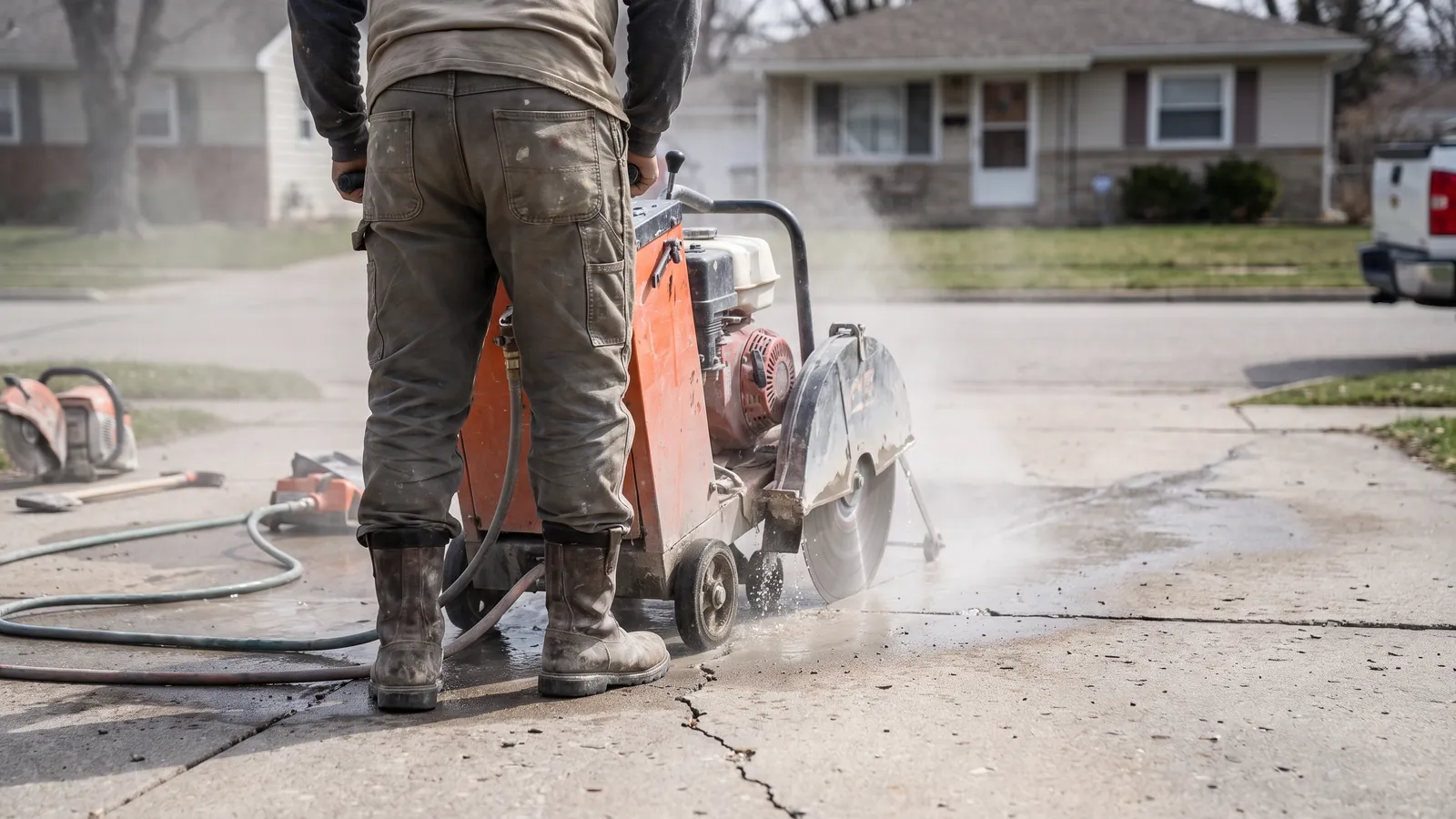
For a broken panel, like the first slab at the garage or the apron at the street, we saw-cut along the joints, break out just that panel, fix the base, drill and set dowels into the neighboring slabs, and pour a new panel. Repairs to stamped and colored concrete are harder to hide, and we'll be straight about how close a match is possible. If a slab is cracked in many directions, sunk in several places, and scaled across the surface, repair stops making sense and replacement is cheaper over ten years.
What the job includes
- Diagnosis before price. Crack width, movement, height difference and the cause checked first
- Flexible crack sealing. Cracks routed, cleaned and filled with a sealant that moves with the slab
- Resurfacing scaled concrete. Loose surface removed, polymer-modified overlay applied and textured
- Panel replacement. Saw-cut along joints, base fixed, doweled to neighboring slabs, poured new
- Joint sealing. Old, open joints cleaned and sealed to keep water out of the base
- Honest repair-or-replace call. A written comparison when replacement is the better buy
Concrete repair prices in Huntsville
| Item | Typical 2026 range | What drives it |
|---|---|---|
| Crack routing and sealing | $2 – $5 / linear ft | Width, depth, number of cracks |
| Resurface a scaled driveway | $3.50 – $7 / sq ft | Prep, overlay thickness, texture |
| Replace a single panel | $900 – $2,400 | Panel size, doweling, haul-off |
| Joint cleaning and sealing | $1.50 – $3.50 / linear ft | Joint width and backer rod |
| Patch a spalled corner or edge | $150 – $450 | Size and access |
| Minimum repair visit | $250 – $400 | Small jobs, one trip |
Ranges are for budgeting in the Huntsville area. Your price is written after we measure, with base, steel, finish, tear-out and permit on separate lines.
On the job
Questions about concrete repair
Can all cracks be fixed?
All cracks can be sealed. Not all should be. If the slab is moving, a sealed crack will open again, so we'd point you to leveling or replacing that section instead.
Why is my driveway flaking?
Usually the top layer was weak from the start: too much water in the mix, finishing while water was on the surface, no air entrainment, or salt during an ice storm. Freeze-thaw then pops the weak layer off. Resurfacing fixes the surface if the slab underneath is sound.
Will a repair match my concrete?
Sealed cracks will show as lines. A resurfaced area looks new and uniform, and resurfacing the whole slab gives the best match. Replaced panels will be lighter for a while before they weather in.
How long does resurfacing last?
On a stable slab with a good bond and occasional resealing, many years. It won't stop cracks in the slab below from coming through, which is why we check for movement first.