Freeze-thaw and your driveway: what a North Alabama winter does to concrete
Huntsville's winters are mild by northern standards, but January averages a low near 30°F and many nights cross freezing and thaw by lunch. Each of those cycles works on outdoor concrete.
What actually happens
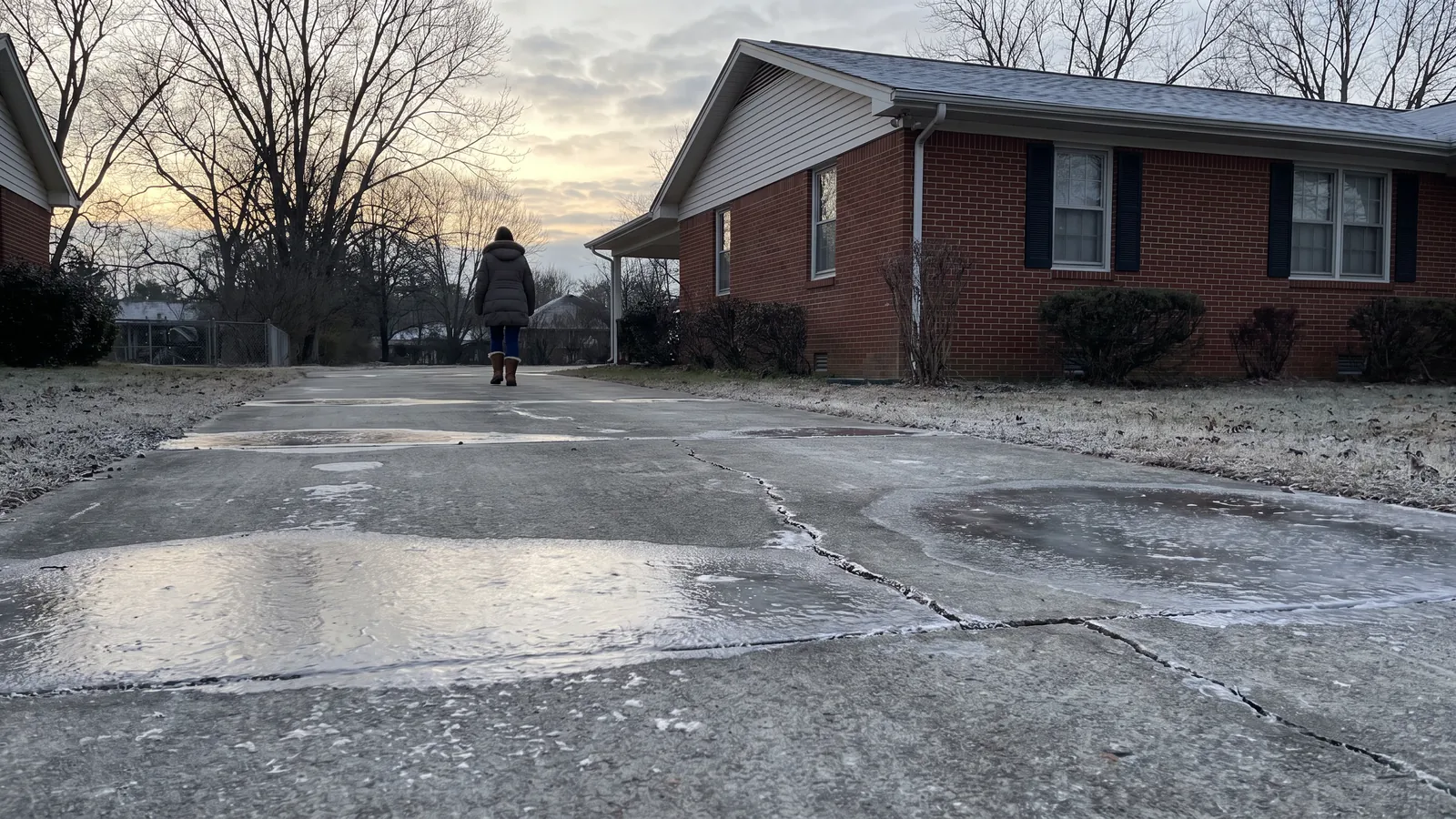
Concrete is full of tiny pores. Rain and melted frost soak into them. When the temperature drops below freezing, that water turns to ice and expands by about nine percent, pushing on the concrete around it. When it thaws, more water moves in. One cycle does nothing you can see. Dozens of cycles every winter, year after year, break the weakest layer first: the top surface. That's scaling, where thin flakes pop off and leave a rough, pitted drive. Water in cracks and joints does the same thing on a larger scale, widening them and freezing under slab edges.
North Alabama is in an awkward spot for this. Farther north, the ground freezes and stays frozen. Here it swings above and below freezing again and again, which means more cycles, not fewer. Add about 54 inches of rain a year and an occasional ice storm, and outdoor concrete takes a beating it isn't always built for.
How we build against it
- Air entrainment. For exterior slabs we order an air-entrained mix. Billions of microscopic bubbles give freezing water room to expand without cracking the paste. It's the single biggest factor in freeze-thaw durability.
- Strength and a low water ratio. A 4,000 psi exterior mix, placed without extra water added at the truck to make it easier to spread. Wet mixes make weak tops.
- Finishing at the right time. No troweling bleed water back into the surface. That's how weak, scale-prone tops are made.
- Curing. Keeping the slab moist or sealed for the first days so the surface gains full strength.
- Drainage. A slab that sheds water and sits on stone holds less water to freeze.
- Sealing. A penetrating sealer after the first month or so, renewed every few years, keeps water out of the pores.
Ice storms and de-icers
When ice comes, reach for sand or kitty litter for traction on young concrete. Rock salt (sodium chloride) is hard on concrete in its first year and worsens scaling on any slab. Never use products containing ammonium nitrate or ammonium sulfate; they attack concrete chemically. Calcium magnesium acetate is gentler if you need a melter. Brine and salt dripping off cars after the roads are treated also lands on your garage apron, so rinse it in the spring.
Pouring in cold weather
We pour through winter on the right days. Fresh concrete must not freeze before it reaches early strength, so we watch the forecast for the first several days, use warm water or set accelerators when it's cool, and keep insulated blankets on hand for a cold night. If the forecast turns, we move the pour.
Quick answers
Why is the top of my driveway flaking off?
Scaling: a weak surface layer breaking up under freeze-thaw, often from too much water in the mix, finishing over bleed water, no air entrainment, or salt. A sound slab can be resurfaced.
Does Huntsville really get enough freezing to matter?
Yes. It's the number of times it crosses freezing, not how cold it gets, that does the damage, and our winters cross it often.
Can I use salt on my driveway?
Avoid it on concrete less than a year old, and use it sparingly after that. Sand gives traction without harming the slab.
Does sealing really help?
A good penetrating sealer reduces how much water gets into the surface, which slows freeze-thaw damage. It needs renewing every few years.
Keep reading: Caring for new concrete · Concrete repair · Red clay and concrete · Concrete driveways