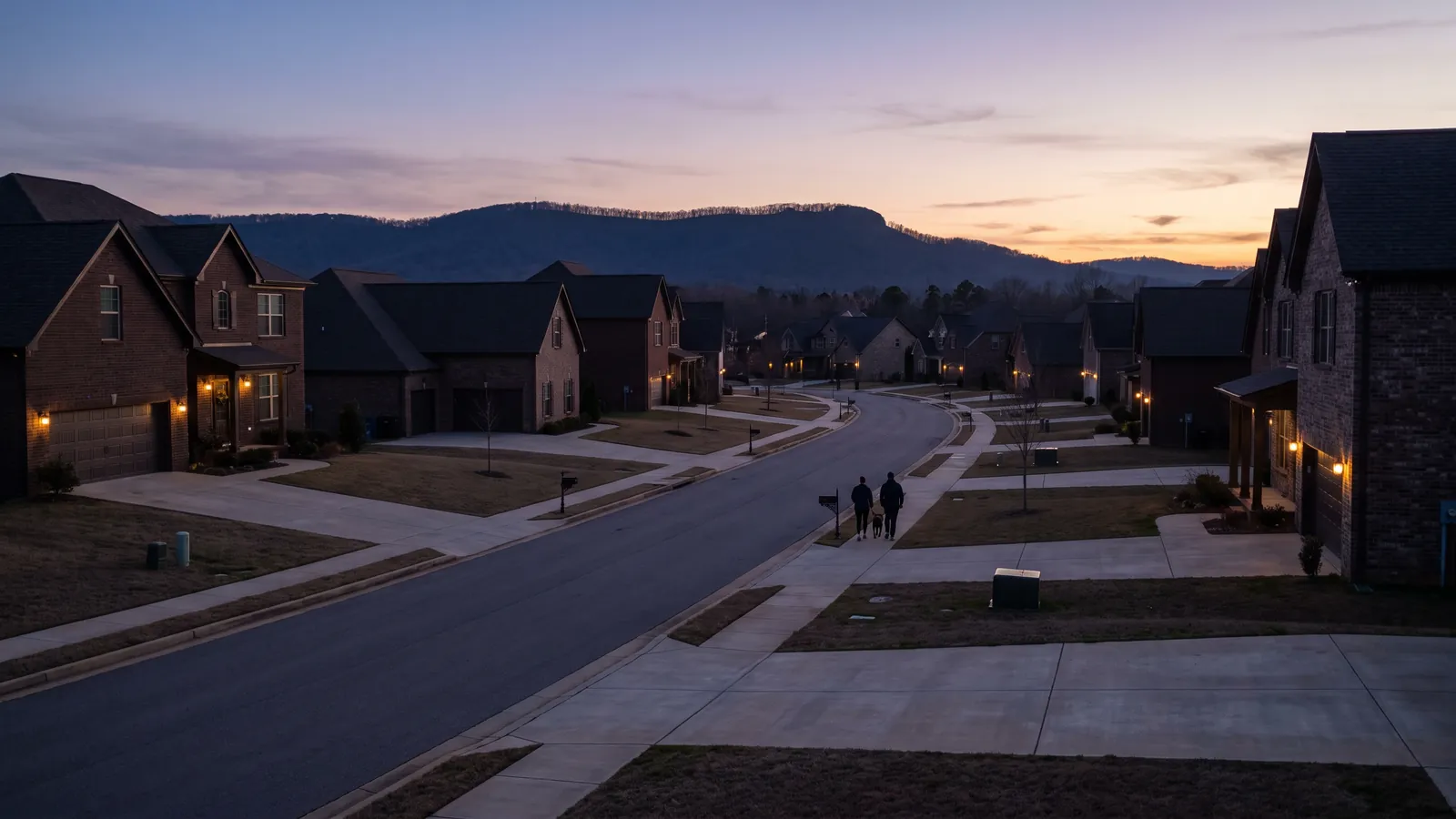
Red clay and concrete: why the ground decides how a slab ages
Dig almost anywhere in the Tennessee Valley and you hit dense red clay, often with limestone below. It's good ground when it's managed and miserable ground when it isn't. Here's what it means for a driveway or patio.
What's under Huntsville
The Valley floor is limestone country. Over a very long time, weathering of that rock left deep red and reddish-brown clay soils across much of Madison County, and the same limestone gives the area its springs and sinkholes; Big Spring downtown is the famous example. For concrete work, three properties of that clay matter more than anything else.
- It changes volume with water. Clay swells when wet and shrinks when it dries. A slab on unprepared clay rises in a wet spring and settles in a dry late summer, and it doesn't do it evenly.
- It doesn't drain. Rain that gets under a slab stays there. Saturated clay is soft, and soft clay lets a slab sink at the edges and corners.
- It's slick when disturbed. Clay that has been dug, rained on and driven over turns to mud that can't support a base until it dries or is removed.
How we build on it
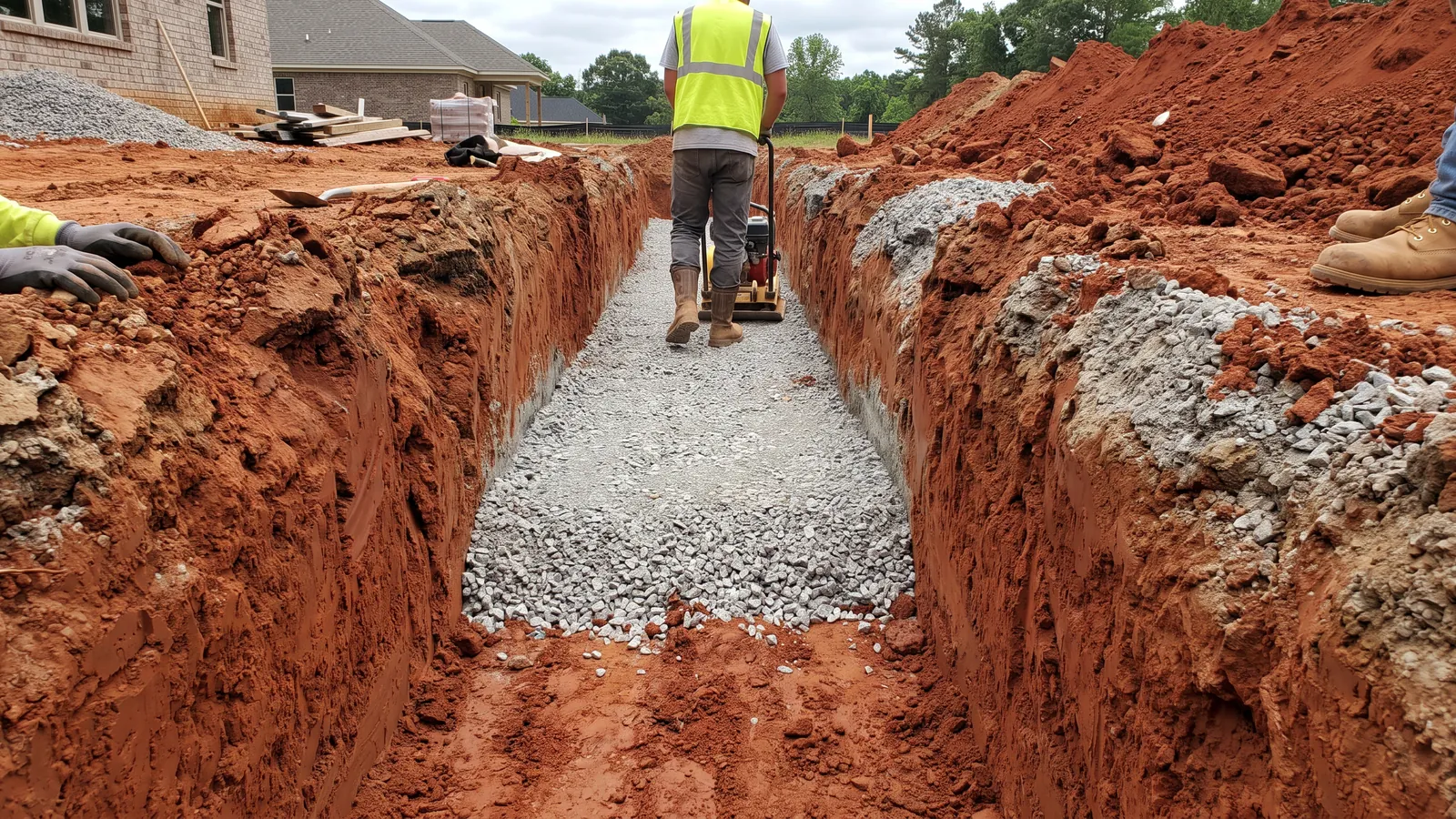
- Take out what can't hold weight. Topsoil, roots and soft, wet clay are dug out until we reach firm ground.
- Separate the base from the clay. On soft or wet sites, a geotextile fabric keeps clay from pumping up into the stone over time.
- Build a stone base. Crushed stone, placed and compacted in lifts, gives the slab even support and a place for water to move rather than sit.
- Keep water out. Slopes away from the house, downspouts carried past the slab, joints sealed, and edges backfilled so runoff doesn't cut under them.
- Reinforce where it counts. Steel doesn't stop clay from moving, but it holds a cracked slab together and helps it bridge small soft spots.
New construction fill
Many lots in the newer parts of Madison, Harvest, Meridianville and Hazel Green were cut and filled during construction. Fill placed without full compaction keeps settling for years, especially next to foundations where the backfill was dumped in. That's why so many garage approaches and patios drop a year or three after move-in. On those lots we dig deeper, compact harder, and talk with you about the risk honestly.
Limestone and sinkholes
Occasionally a dig turns up rock close to the surface, or a soft pocket that hints at a void. We level around high rock so the slab has even support, and if anything suggests a sinkhole, we stop and tell you before pouring. That's rare on a typical residential lot, but the Valley's geology makes it worth knowing about.
Quick answers
Why does my patio slope toward the house now?
The ground near the foundation was probably backfill that settled, or water from the roof softened the clay. Leveling and redirecting the water usually fixes it.
Can I pour concrete directly on clay?
You can, but it's the main reason slabs here crack and settle. A compacted stone base costs a little more and adds years.
Do I need fabric under my driveway?
On soft, wet clay or where water collects, a geotextile fabric is cheap insurance. On firm, dry ground it's optional. We decide on site.
Is a crack from clay movement dangerous?
In a driveway or patio, usually not, but it's a sign water or soil movement needs attention before it gets worse. Cracks in a house foundation are a different question for a foundation specialist.
Keep reading: Freeze-thaw and concrete · Concrete leveling · Driveway replacement · Retaining walls