Caring for new concrete: the first week, the first winter and the next twenty years
Most of what makes a slab last is decided before and during the pour. The rest is a short list of habits. Here's the list we leave with every job.
The first week
| When | What's OK |
|---|---|
| Day 1 | Keep people, pets and sprinklers off. Leave curing compound or covers in place. |
| Days 2–3 | Careful foot traffic. No bikes, wheelbarrows or furniture dragging. |
| About day 7 | Passenger cars on a driveway, in normal weather. Not on the edges. |
| About day 28 | Heavy trucks, trailers, RVs and dumpsters. Full design strength. |
Cold weather stretches all of those. We'll write your own dates down before we leave.
The first months
- Water it if we ask you to. In hot, dry spells a light misting in the first days helps the surface cure.
- Keep the edges loaded lightly. Edges are the weakest part of a slab. Don't drive off the side of a new drive.
- Backfill and sod the edges. Soil against the slab edges keeps runoff from cutting under them.
- Watch the downspouts. If one empties onto or beside the slab, extend it.
- Skip the salt in the first winter. Sand for traction. See the freeze-thaw guide.
Sealing
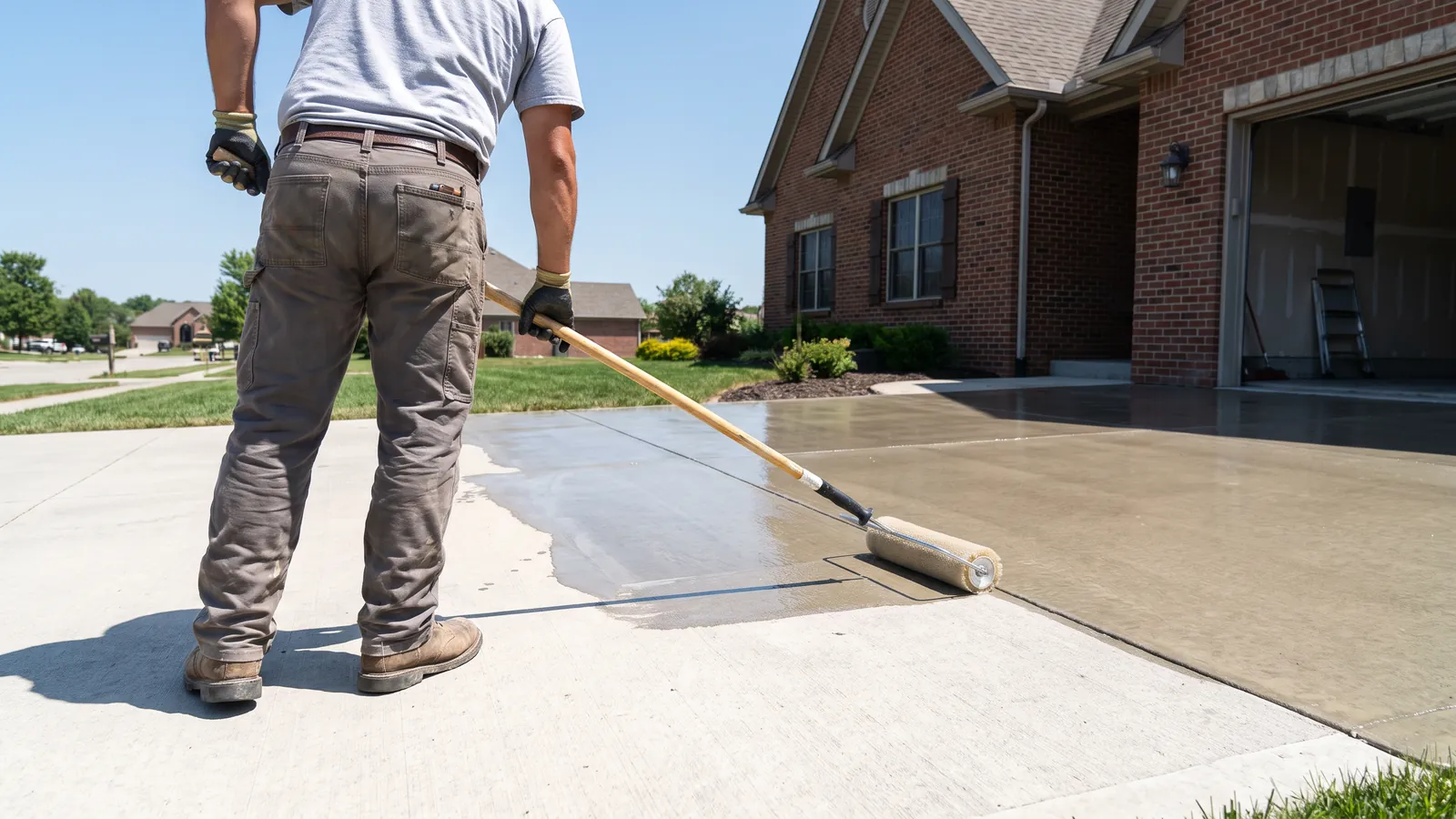
Outdoor concrete here benefits from a penetrating sealer, a silane or siloxane product that soaks in and repels water without making the surface slick. Wait until the slab has cured, usually about a month, and apply on a dry day with dry weather ahead. Plan to repeat every three to five years. Stamped, stained and colored concrete need a film-forming acrylic sealer instead, renewed every two to three years, with anti-slip grit where people walk.
Cleaning
Sweep regularly and rinse in spring to get winter grime and road brine off the apron. Oil spots come up best while fresh: cat litter to soak, then a degreaser and a stiff brush. A pressure washer is fine on broom finish at a moderate setting; up close at high pressure it can etch the surface, and it can strip sealer from decorative work.
Every few years
- Check the joints. Open joints let water into the base. Clean and seal them.
- Seal cracks early. A flexible sealant in a new crack keeps water out.
- Look for settling. A slab that has dropped at a joint can usually be lifted while it's still in one piece.
Quick answers
When should I seal new concrete?
After it cures, usually about 28 days, on a dry day with dry weather ahead. Then every three to five years for plain concrete, two to three for decorative.
Can I pressure wash my driveway?
Yes, at a moderate setting and with the tip held back from the surface. High pressure up close can etch broom finish and strip decorative sealers.
How do I get oil off concrete?
Soak fresh spills with cat litter, then scrub with a concrete degreaser. Old stains may need a poultice or a professional cleaner.
My new slab has small hairline cracks. Is that normal?
A few fine shrinkage cracks are normal, especially near corners. Cracks that widen or show height differences are worth a call.
Keep reading: Freeze-thaw and concrete · Concrete repair · Stamped concrete · Decorative concrete