Decorative concrete: exposed aggregate, stain, color and sawn designs
Not every upgrade needs a stamp. Exposed aggregate, acid and water-based stains, integral color and sawn patterns change how a slab looks and feels for less than stamping, and some of them hold up better outdoors.
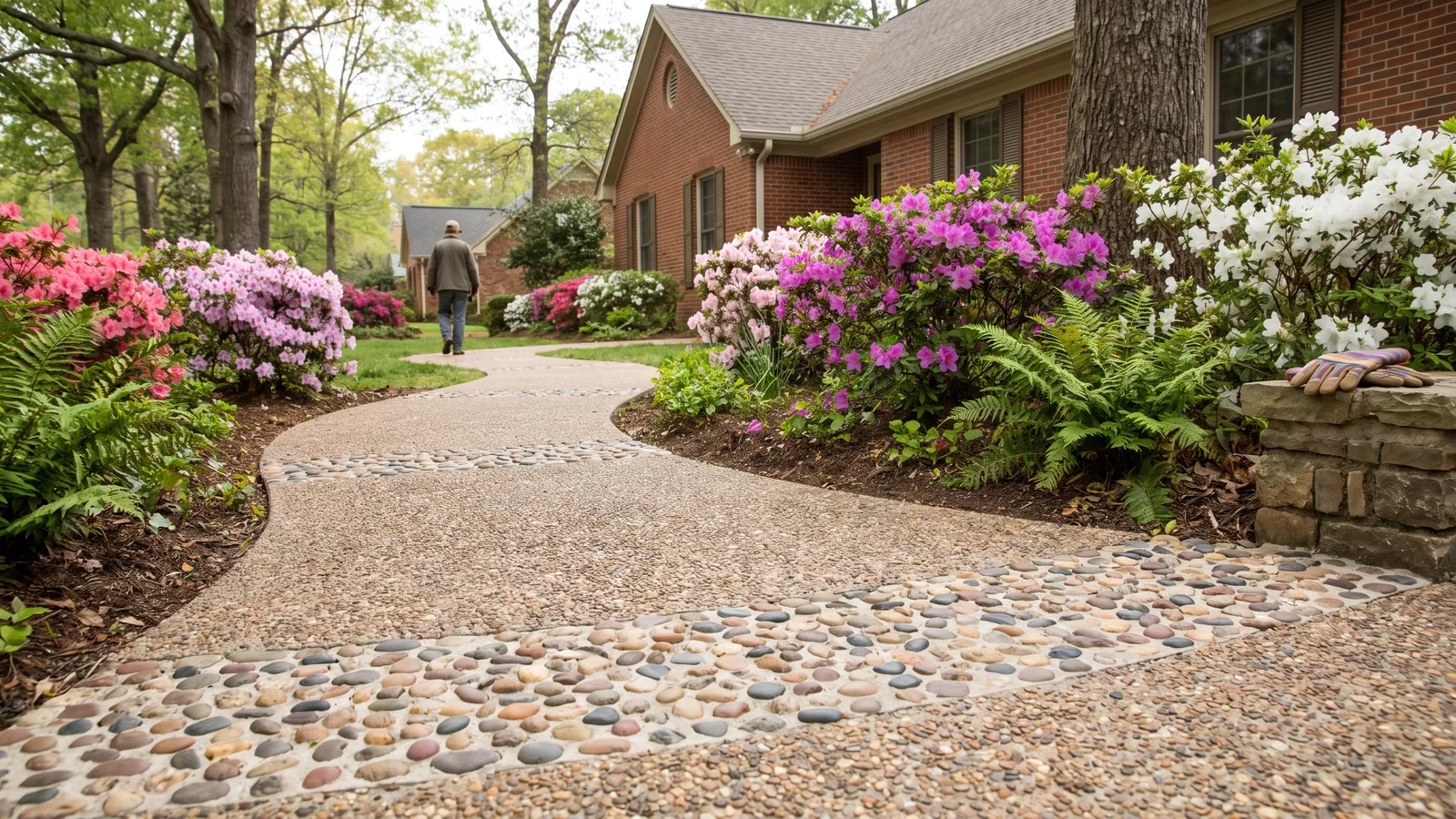
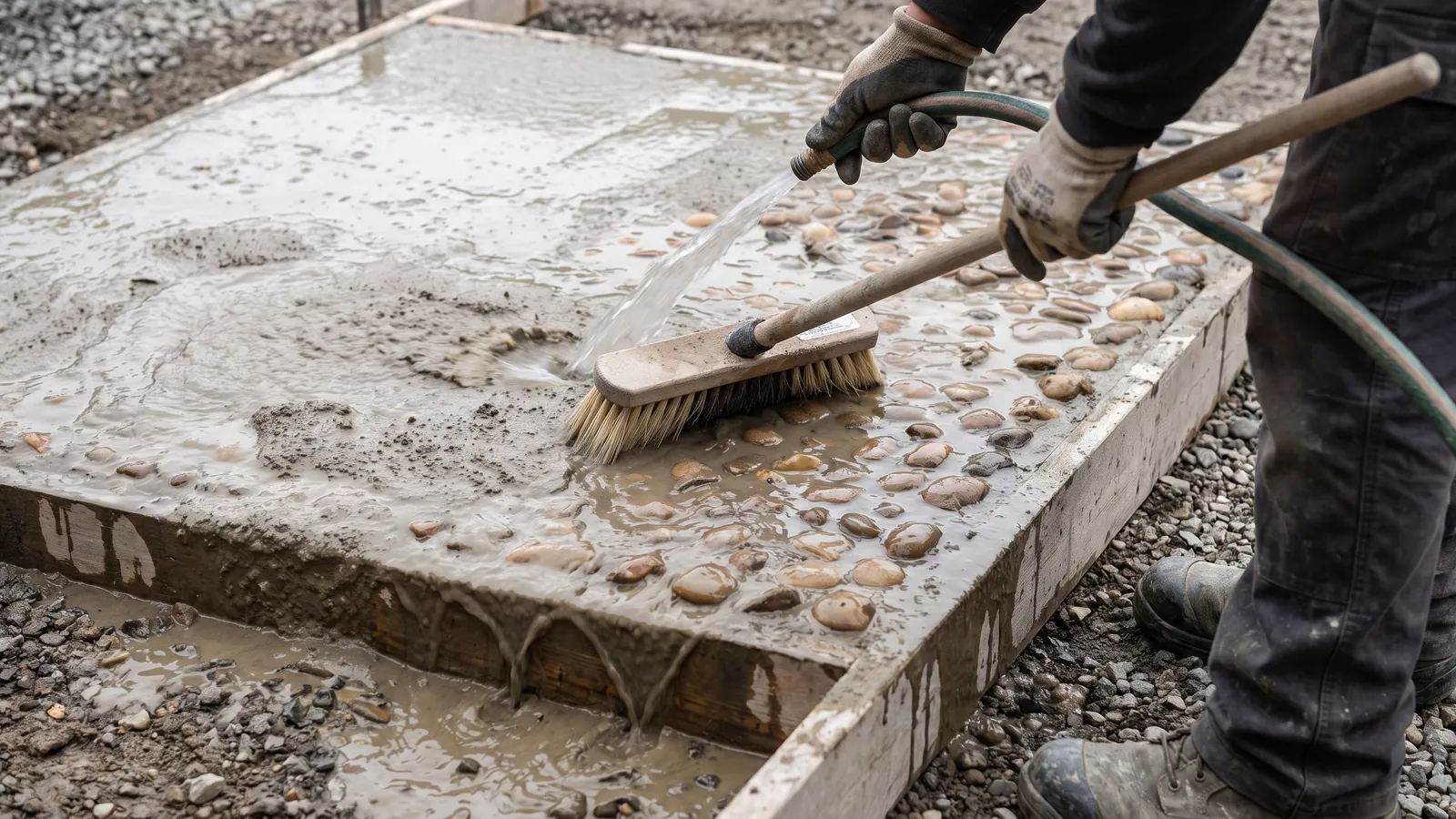
Exposed aggregate is the finish we suggest most often for walks and drives that want to look better than gray without becoming slick. The slab is poured, finished, and then the top paste is washed or retarded away to show the stone in the mix. Rounded river gravel gives a soft, pebbled look; crushed stone gives a sharper texture. It's grippy wet, hides tire marks and leaves, and it handles freeze-thaw well once sealed. It's also unforgiving of bad timing, so the wash-off is done by people who've done it before.
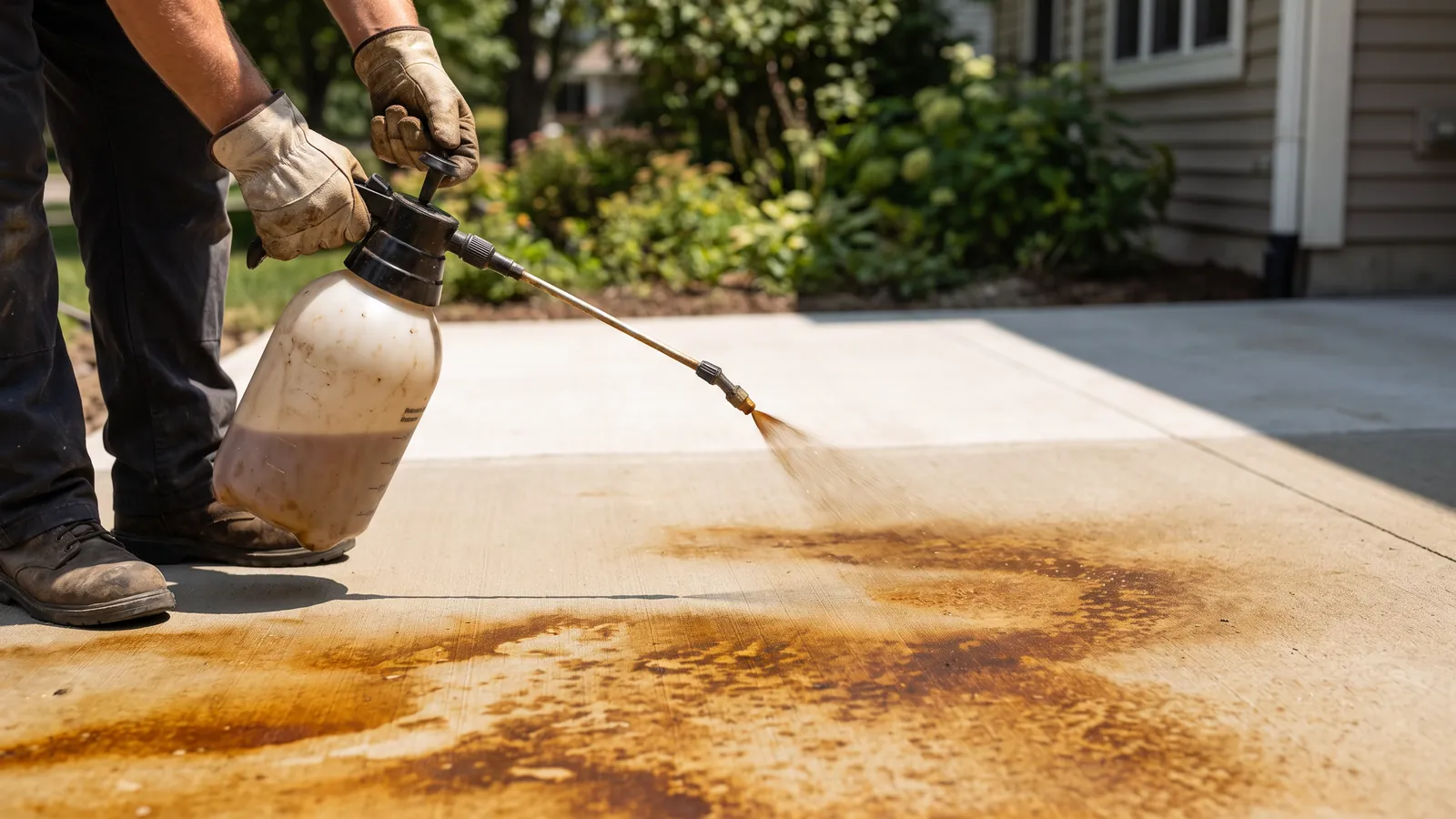
Acid stain reacts with the lime in cured concrete to make mottled amber, brown and green-gray tones that look like old leather or weathered stone. No two slabs come out the same, which is the point. Water-based stains give more predictable, wider color choices and can freshen a plain patio that's already in place. Both need a clean, sound slab and a sealer on top. Integral color is mixed into the truck so the color goes all the way through; it won't wear off, and a chipped corner stays the same shade. Sawn designs, from a simple diamond grid to a compass rose or a border, are cut into cured concrete and can be stained in contrasting colors.
Mixing finishes is often where the best-looking work is: a broom-finish field with a smooth, colored border; an exposed aggregate walk with plain bands that line up with the house; a stained patio with sawn squares. We'll talk through how each one wears in our climate, what it needs for upkeep, and where it makes sense to spend the money and where plain concrete does the job.
What the job includes
- Exposed aggregate. Paste washed off to reveal the stone, with a choice of rounded or crushed aggregate
- Acid or water-based stain. Applied to clean, cured concrete, new or existing, then sealed
- Integral color. Pigment mixed in the truck so the color runs through the whole slab
- Sawn patterns and borders. Grids, borders or medallions cut in and stained to contrast
- Finishes combined. Plain fields with decorative bands where they get the most notice
- Sealer and care notes. The right sealer for the finish and a written recoat schedule
Decorative concrete prices in Huntsville
| Item | Typical 2026 range | What drives it |
|---|---|---|
| Exposed aggregate slab | $10 – $15 / sq ft | Stone choice, wash-off timing, slab size |
| Integral color added to a pour | + $1.50 – $3.50 / sq ft | Color strength and yardage |
| Acid stain + seal, existing slab | $3 – $7 / sq ft | Cleaning, repairs, number of colors |
| Water-based stain + seal | $3 – $6 / sq ft | Color layering, prep |
| Sawn grid or border, stained | $4 – $10 / linear ft | Pattern complexity |
| Clean and reseal decorative concrete | $1.50 – $3 / sq ft | Old sealer removal |
Ranges are for budgeting in the Huntsville area. Your price is written after we measure, with base, steel, finish, tear-out and permit on separate lines.
On the job
Questions about decorative concrete
Which decorative finish lasts best outdoors?
Exposed aggregate and integral color are the toughest because the look is in the concrete, not on it. Stains and sealers need recoating every few years to keep their depth.
Can you stain my old patio?
Usually, if it's sound and clean. Oil, paint and old sealer have to come off first, and stain shows every patch and crack rather than hiding them, so we'll look at it before promising a result.
Is exposed aggregate rough on bare feet?
Rounded river stone is fairly comfortable; crushed stone is sharper. Around a pool, we'd steer you toward a smaller rounded aggregate or a different finish.
Does colored concrete fade?
Integral color fades very little. Surface color, stains and color hardener can lighten in strong sun, which sealer slows down. Expect some softening over the years, especially on south-facing slabs.