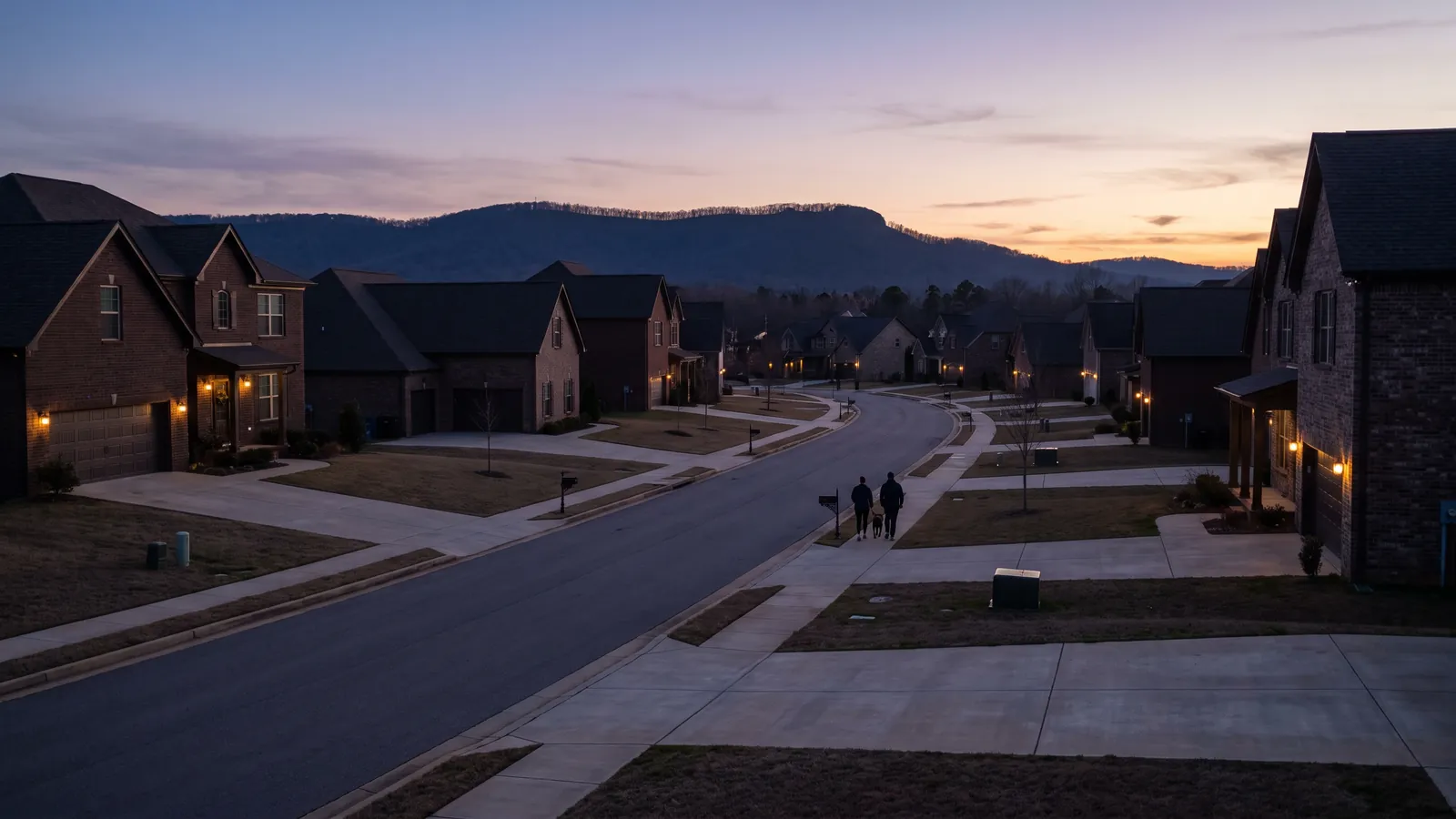
New concrete driveways built for clay, rain and the occasional moving truck
A driveway is the biggest slab most homes ever get, and the one that takes the most abuse. We build it from the subgrade up so it stays flat, drains away from the garage and cracks only where we told it to.
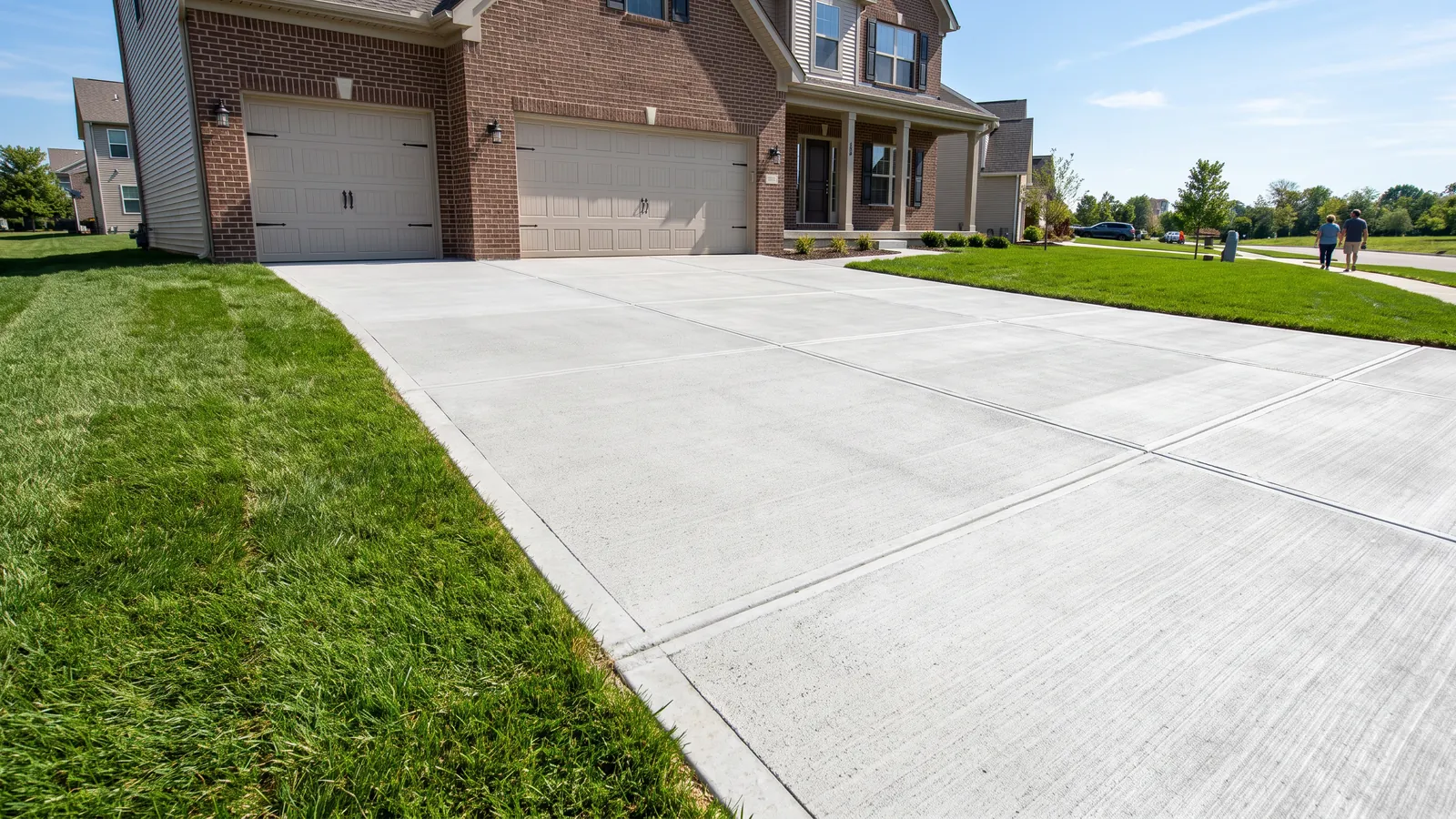
Most driveway failures we're called to look at in Huntsville started before the first truck arrived. The topsoil was left in, the base was thin or never compacted, the slab was poured at three and a half inches instead of four or five, and the joints went in at fifteen-foot spacing or the next morning, after the slab had already decided where to crack. Red clay then does the rest: it swells in a wet March, shrinks in a dry August, and the slab rides up and down with it.
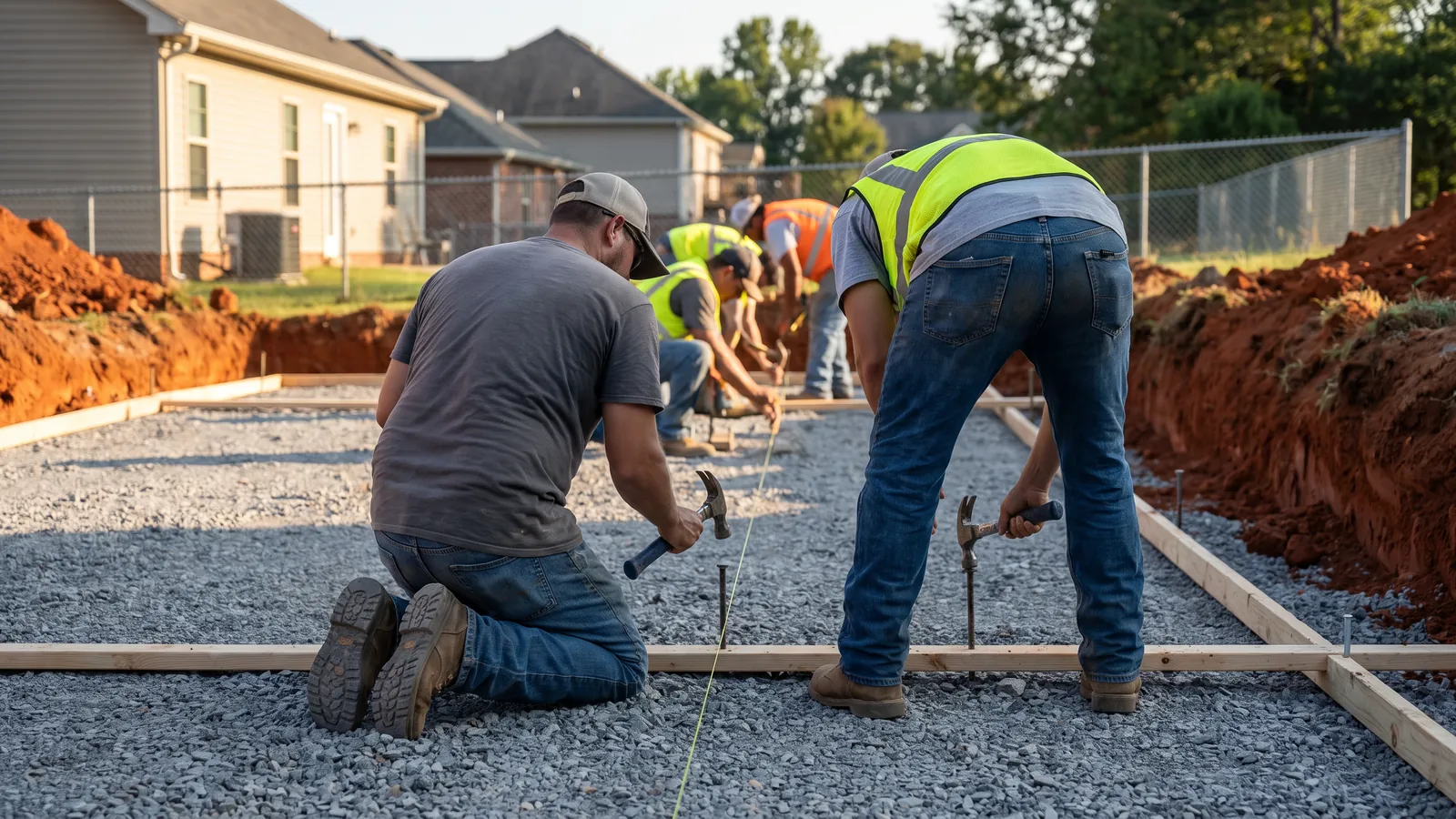
A new drive from us starts with digging out to firm soil and hauling the organic layer off. We lay down a crushed-stone base, typically four inches compacted with a plate compactor or roller, and grade it so the finished slab falls away from the garage and toward the street or a side yard at a slope you won't notice walking but rain will. Forms are set to string lines. Steel goes in on chairs so it sits in the middle of the slab, not on the dirt: rebar for drives that carry trucks, trailers or an RV pad, and fiber or welded wire where loads are lighter. The mix is a 4,000 psi, air-entrained ready-mix for outdoor work, because January here freezes and thaws enough times to matter.
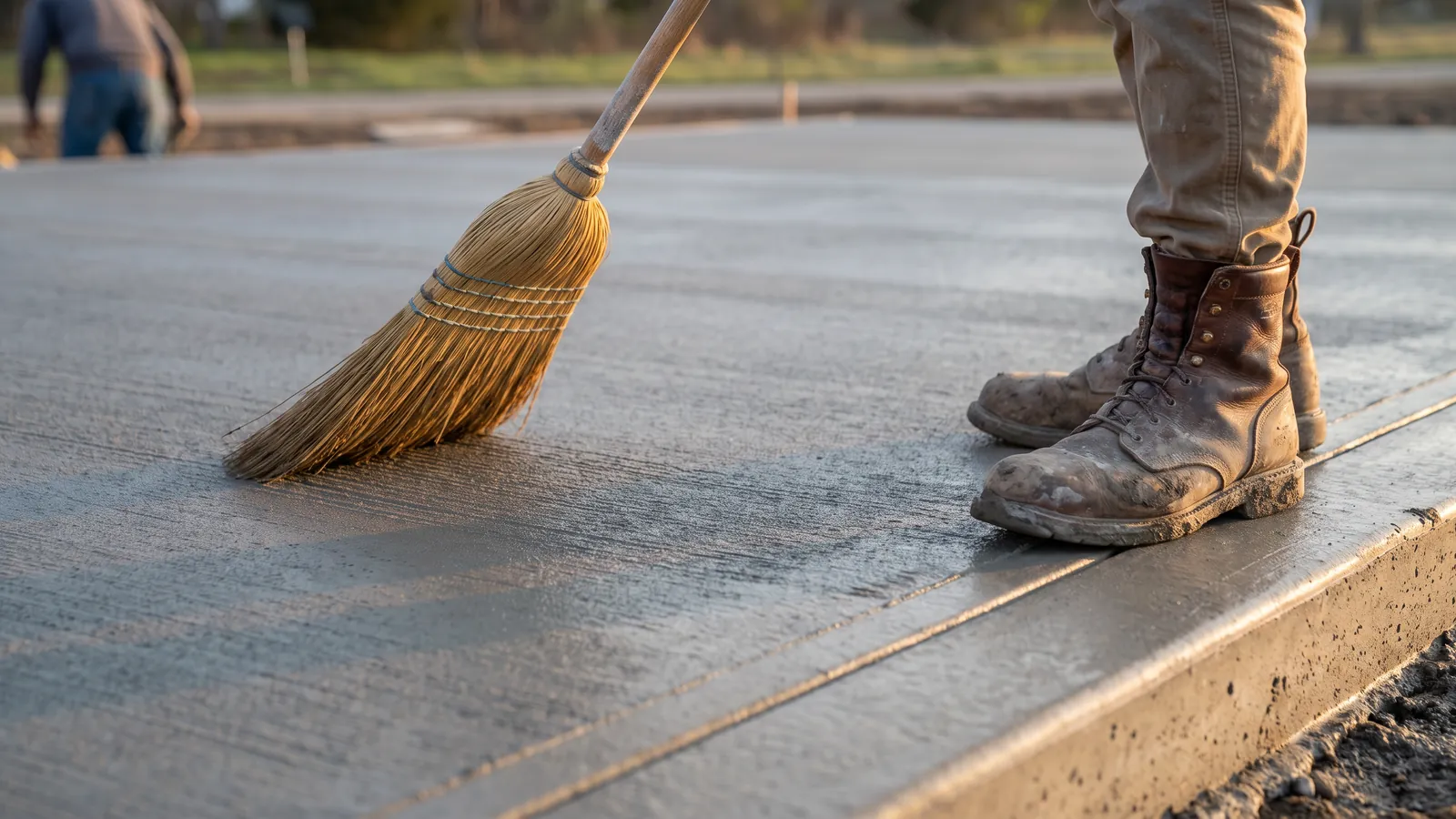
On pour day the crew places, screeds, bull-floats and edges the slab, then pulls a broom across it for grip on wet mornings. Control joints are tooled or saw-cut the same day on a grid sized to the thickness, usually no more than ten feet apart for a four-inch slab and squarer is better. Then it cures. We'll leave you a written timeline for walking, driving and sealing, and the apron at the street is built to whatever the City, Madison or the county requires.
What the job includes
- Subgrade dug to firm soil. Topsoil and roots hauled off, soft spots dug out and replaced, so the base sits on ground that won't keep settling
- Compacted stone base. Crushed stone placed and compacted in lifts, graded for drainage away from the house
- Steel sized to the load. Rebar on chairs for heavier loads, fiber or wire mesh for light traffic, written on the estimate
- 4,000 psi air-entrained mix. Ordered for exterior work in a freeze-thaw climate, at four inches or thicker where trucks park
- Joints on schedule. Tooled or saw-cut the same day, spaced for the slab thickness, so cracks follow the lines
- Apron and permit. The approach to the street built to City, Madison or county requirements, with the curb cut permit on the estimate when needed
Concrete driveways prices in Huntsville
| Item | Typical 2026 range | What drives it |
|---|---|---|
| New driveway, broom finish, 4 in. | $7 – $11 / sq ft | Size, access for the truck, base depth needed |
| Thicker 5–6 in. section for trucks or an RV pad | + $1 – $2 / sq ft | Extra concrete and heavier steel |
| Crushed-stone base, beyond standard | $1 – $2.50 / sq ft | Soft clay, fill areas, regrading |
| Rebar grid instead of fiber/mesh | + $0.75 – $1.50 / sq ft | Bar size and spacing |
| Street apron at the curb | $800 – $2,000 | Curb cut work, city standards, traffic control |
| Typical two-car drive, 600–800 sq ft | $4,500 – $8,500 | Before any tear-out or decorative finish |
Ranges are for budgeting in the Huntsville area. Your price is written after we measure, with base, steel, finish, tear-out and permit on separate lines.
How the slope and the joints get decided
- We shoot grades from the garage floor to the street or ditch so the slab drains at a steady fall, usually around a quarter inch per foot, and never back toward the house.
- Where the drive meets a sidewalk or the garage slab, we set an isolation joint so the two can move separately.
- The joint grid is laid out before the pour: long drives are split into panels as close to square as the width allows.
- Downspouts that empty onto the drive get a note on the estimate, because water running under a new slab is how clay heaves it.
On the job
Questions about concrete driveways
How thick should my driveway be?
Four inches is the floor for passenger cars on a good base. If you park a full-size truck, a trailer, a boat or an RV, or expect concrete trucks and moving vans, we pour five or six inches in those areas and add rebar.
Rebar, wire mesh or fiber?
They do different jobs. Rebar adds strength where the slab carries weight and holds cracked pieces together. Mesh and fiber mostly control small shrinkage cracks. None of them replace a good base or properly spaced joints. The estimate says which one goes where and why.
When is the best time of year to pour?
Spring and fall are the easiest, but we pour most of the year here. In July heat we start early and keep the slab from drying too fast. In winter we watch the forecast, pour on days that stay above freezing, and cover fresh concrete if a cold night is coming.
Can you widen my existing driveway instead?
Often, yes. We pin the new section to the old one with dowels so the two move together, and match the finish as closely as concrete allows. A new strip will look newer for a season or two.
Will my new driveway crack?
Concrete shrinks as it cures, so some hairline cracking is normal. The goal is that cracks happen in the joints, where you'll never notice them. A crack that opens, steps up or keeps growing is a base or drainage problem, and that's what our prep is built to prevent.